Unboxing the Cosmere RPG: A Review by Someone Who Hasn’t Read the Books (But Owns Too Many Dice)
A brave (or foolish) TTRPG fan dives headfirst into the deep end of the Cosmere — without having read a single word of the books. What could possibly go wrong?
There are two types of people in the world: those who have read every single Brandon Sanderson novel and can tell you the tensile strength of a Shardblade, and those who nod politely and hope no one asks follow-up questions.
I, dear reader, am firmly in the second camp. My knowledge of the Cosmere before opening this box was limited to “it’s got magic, planets, and fans who could probably overthrow a small government if united under one Discord server.” But I do love tabletop roleplaying games, and that’s what really matters here.
So, with all the enthusiasm of a clueless wizard opening a grimoire upside-down, I cracked open the Cosmere Roleplaying Game.
The Box
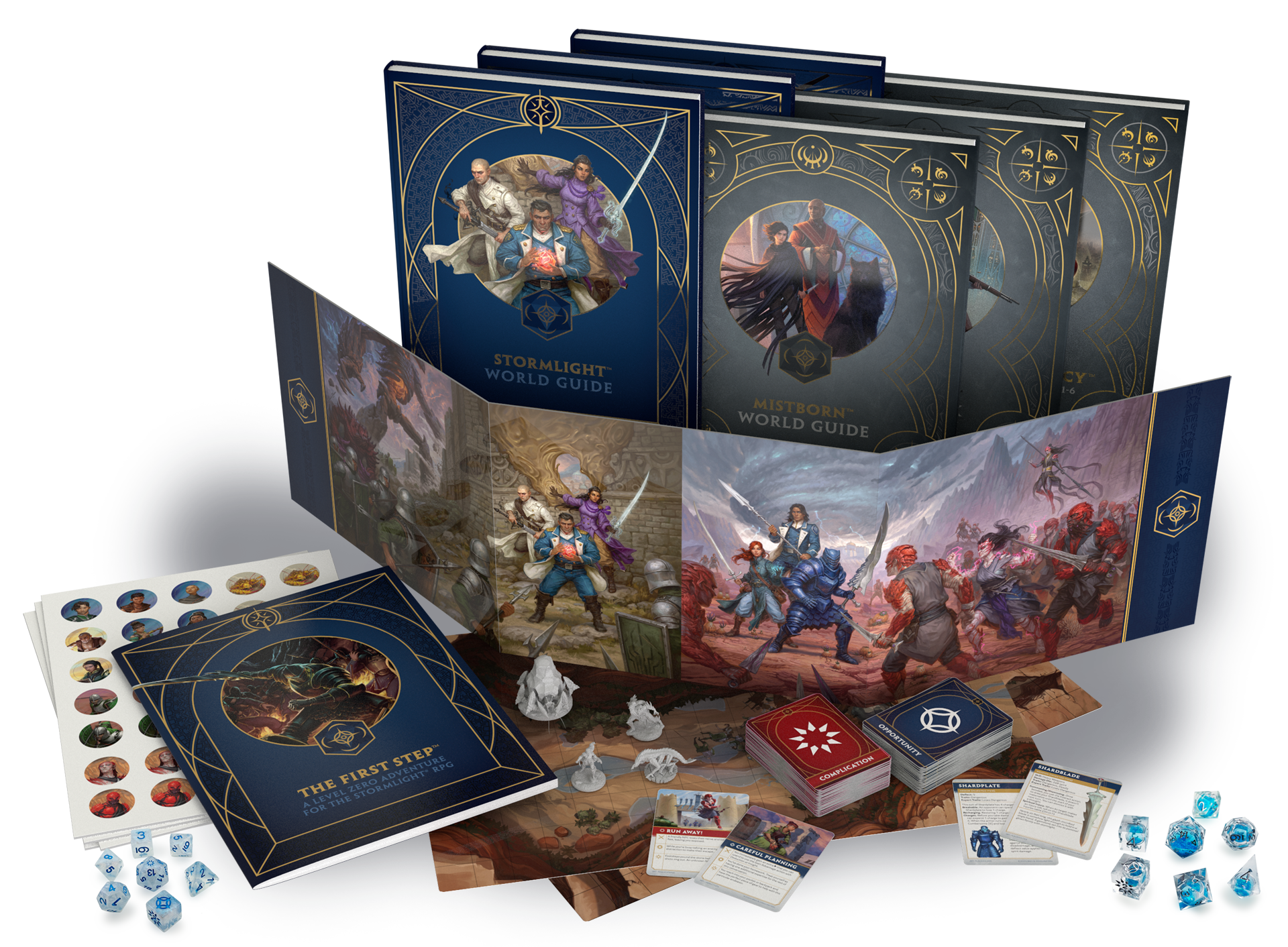
Inside: dice (good start), a rulebook thicker than a theology debate, and several sheets of character options that all look like they were designed by someone who’s never heard the word “simple.”
Now, I’m used to RPGs that require a bit of reading — perhaps a pamphlet, maybe a novella — but this? This was a course. The book cheerfully explains that the universe is made of interlocking systems of investiture, shards, realms, and metaphysical mechanics, which, to me, reads like someone turned a quantum physics textbook into a religion.
Still, it’s presented with such confidence that I found myself nodding along. “Ah yes,” I murmured sagely, “of course the Cognitive Realm is distinct from the Spiritual Realm.” I have no idea what that means, but it feels right.
The Rules
Mechanically, it’s actually rather good. It manages to be both crunchy and narrative — the RPG equivalent of a cake that’s moist and somehow still crisp around the edges. The core system, Plotweaver, encourages dramatic storytelling, daring gambits, and glorious failures. You roll dice not just to hit goblins, but to weave the threads of destiny, which is all very poetic until you roll a one and destiny hits you back.
Combat feels cinematic — fast, dynamic, and just chaotic enough that no one can predict who’s winning until someone starts narrating a heroic sacrifice. Which is, frankly, how all good combats should go.
The World (As Far As I Understand It)
Apparently, there are several planets, all full of people who are far too dramatic to live in the same universe quietly. Everyone has access to some form of highly specific, gloriously complicated magic — like turning metal into speed, emotion, or spiritual oomph, depending on which book you read. (There are, I am told, many books.)
To a newcomer, it feels a bit like being dropped into a dinner party halfway through dessert and realising everyone else has been discussing the same in-joke for the past decade. Still, it’s a lovely party, and everyone’s very welcoming once they stop arguing about which god exploded first.
Character Creation
Creating a character in Cosmere RPG is delightfully complex — not quite “build your own nuclear reactor” complex, but close. There are entire systems for how your character’s soul interacts with the universe, which sounds intense until you realise it’s also an excellent excuse to explain bad dice rolls.
“Sorry I missed,” you can say, “my Spiritual Aspect was out of alignment.”
You choose your magic, your background, and how many philosophical crises you want to endure before lunchtime. It’s flexible, it’s flavourful, and it has the distinct whiff of someone who thought “optional rules” were for cowards.”
Final Thoughts
Is this game for me, a humble dice-hoarder who couldn’t tell a Kelsier from a Kaladin? Absolutely — though I did have to Google both of those names halfway through character creation.
The Cosmere RPG is ambitious, dramatic, and built on lore so deep you could fall into it and emerge three expansions later speaking in metaphors. But it’s also fun, mechanically sound, and bursting with narrative energy.
You don’t have to understand the entire literary megaverse to enjoy it — though it helps if you enjoy the sensation of being mildly confused in an interesting way.
So yes, I may not know my Shards from my Spren, but I do know a good RPG when I see one. And this one? It’s definitely invested.
Rating: ⭐️⭐️⭐️⭐️⭐️ for Sanderson fans ⭐️⭐️⭐️⭐️ (and one confused eyebrow) for everyone else